
Dental implants are a highly effective and durable solution for replacing missing teeth. Unlike traditional dentures or bridges, dental implants are a permanent option that involves surgically placing a titanium post into the jawbone to act as the root of a missing tooth.

Dental implants are a highly effective and durable solution for replacing missing teeth. Unlike traditional dentures or bridges, dental implants are a permanent option that involves surgically placing a titanium post into the jawbone to act as the root of a missing tooth. Here’s a breakdown of key information about dental implants:
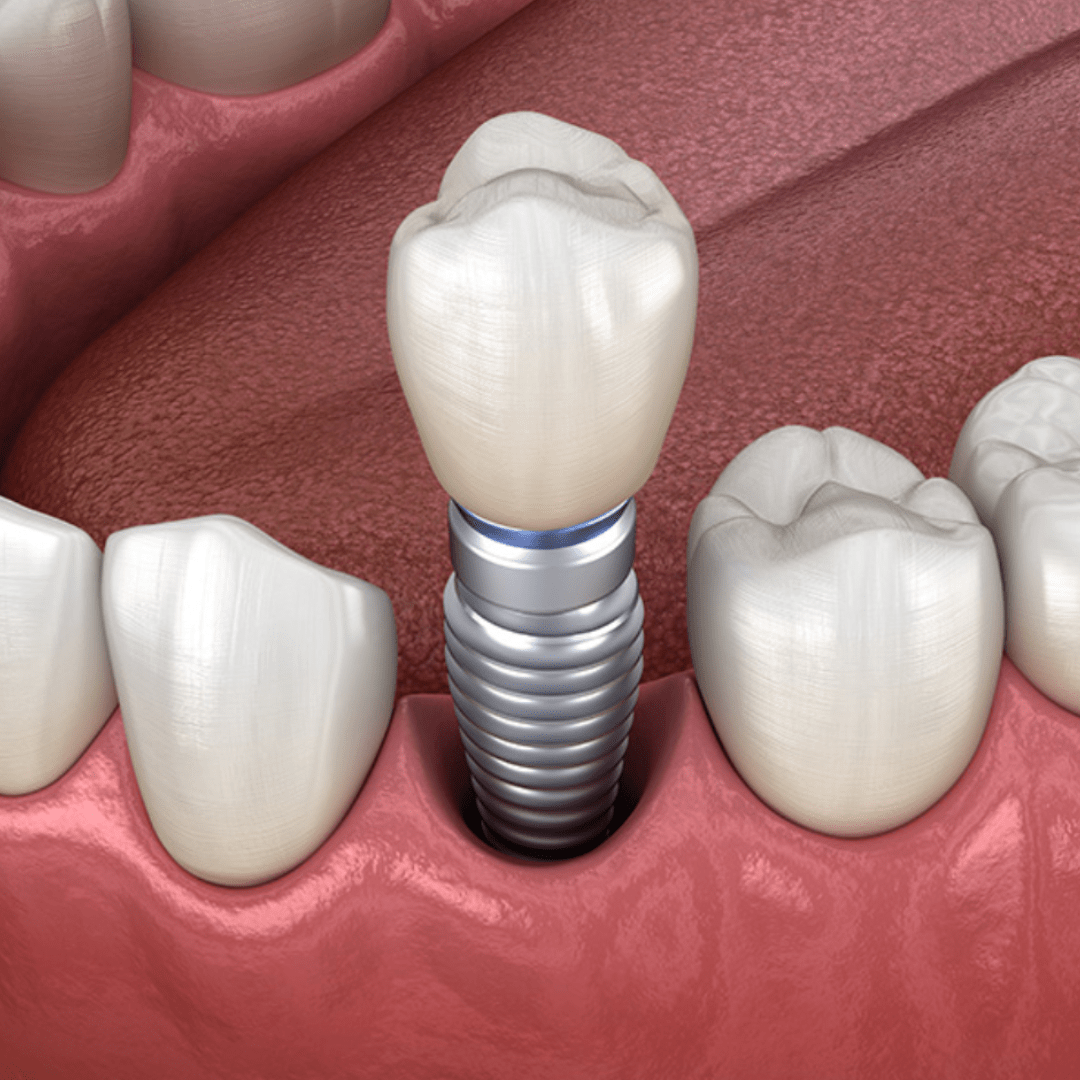
A dental implant consists of three main parts:
1. Implant Fixture: A small, biocompatible titanium post that is surgically inserted into the jawbone. This post serves as the root for a missing tooth.
2. Abutment: A connector that fits onto the implant fixture above the gum line. It helps attach the final restoration (crown, bridge, or denture) securely to the implant.
3. Restoration: The visible part of the tooth, usually made of porcelain or ceramic, that is placed on the abutment to mimic a natural tooth. The restoration is custom-designed to match the colour and shape of your existing teeth.

The process starts with a thorough examination, which may include X-rays or 3D imaging, to assess the condition of your jawbone and overall oral health.
The titanium post is surgically placed into the jawbone under local anaesthesia. The healing period can take several months to allow the implant to fully integrate with the bone.
The implant undergoes a process called osseointegration, where it fuses with the jawbone, providing a stable foundation for the restoration.
Once the implant is securely integrated, the abutment is placed, followed by the attachment of a custom-made crown or bridge.
After the restoration is placed, regular follow-ups are important to ensure the implant is functioning properly.
Ideal candidates for dental implants are individuals who:
• Have sufficient bone mass in the jaw to support the implant.
• Are in good overall health, particularly with no uncontrolled chronic conditions like diabetes or gum disease.
• Do not smoke, or are willing to quit, as smoking can negatively impact healing.
• Are looking for a permanent solution for tooth loss.
Like any surgery, dental implants carry some risks, including infection, implant failure, or damage to adjacent teeth or nerves. However, with proper care and an experienced dentist, these risks are minimal.
Dental implants can be a life-changing solution for individuals seeking to replace missing teeth, offering long-term functionality and an enhanced smile. If you're considering dental implants, it's best to consult with a qualified dentist to determine if you're a suitable candidate.