
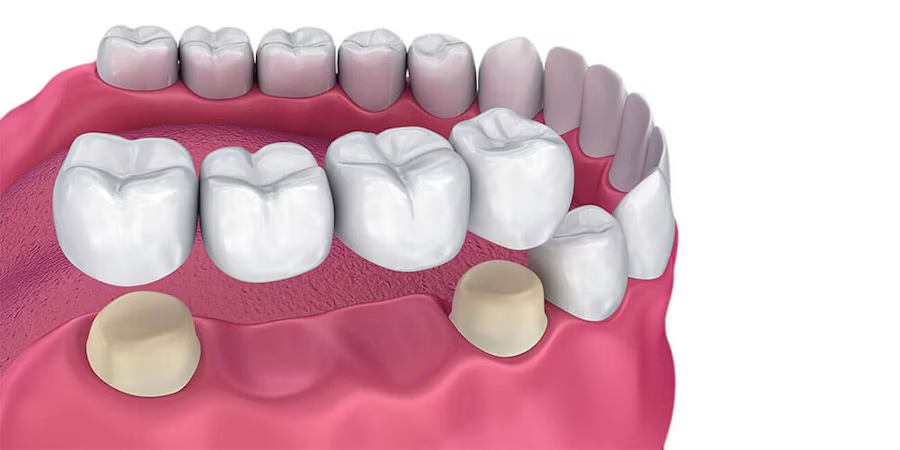
A dental bridge is a common and effective solution for replacing one or more missing teeth. It “bridges” the gap between two healthy teeth, filling in the space where a tooth has been lost. Dental bridges are designed to restore both the function and appearance of your smile, allowing you to chew, speak, and smile comfortably again.
A dental bridge is a prosthetic device that consists of one or more artificial teeth, known as pontics, which are anchored to the surrounding natural teeth or dental implants. The anchor teeth (called abutments) support the bridge and hold it in place.
There are several types of dental bridges, each designed to address different needs:
The process for getting a dental bridge typically involves the following steps:
During your first visit, your dentist will evaluate your oral health and determine if you’re a good candidate for a dental bridge. They may take X-rays and impressions of your teeth.
After the abutment teeth are prepared, the dentist will take impressions of your mouth, which will be used to create a custom bridge that fits perfectly.
While the permanent bridge is being made, your dentist may place a temporary bridge to protect the abutment teeth and provide you with a functional smile.
After the bridge is placed, your dentist will make any necessary adjustments to
ensure that you are comfortable and that the bridge fits properly.
Dental bridges typically last anywhere from 5 to 15 years, depending on the materials used, your oral care routine, and your overall oral health. Implant-supported bridges tend to have a longer lifespan compared to traditional bridges because dental implants help preserve bone structure.
If you have one or more missing teeth and healthy adjacent teeth (or are a candidate for dental implants), you might be a good candidate for a dental bridge. The best way to find out is to schedule a consultation with your dentist, who can assess your specific situation and recommend the best solution for your needs.